From Under the Bridge to the Spotlight: The Industrial Dance Revival
From viral mockery to a thriving revival, industrial dance is back. A new wave of dancers is rediscovering the high-energy moves and with this, the underground roots of Cybergoth subculture."
CULTUREMUSIC
CYB3R GEEN
If you were on the internet in the early 2010s, you probably remember that video; Cybergoths dancing under a bridge, their neon cyberlox flying as they move to the beat. Then came the remixes. The Thomas the Tank Engine version ? Over 7 million views. The original published one ? More than 20 million. Industrial dance had become a viral meme.
For years, that was its legacy, an internet joke. But fast forward to today and industrial dance is seeing a resurgence. Not as an object of laughter, but as a niche revival, thanks to a new generation of dancers who are rediscovering its history as a powerful form of body expression.
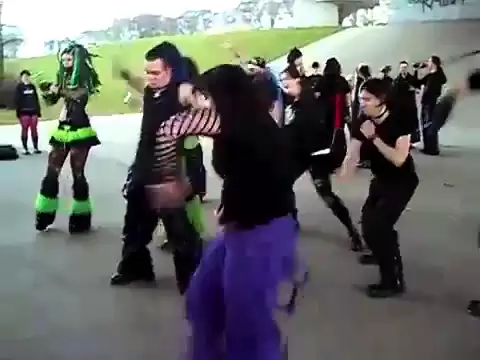
The original Cybergoth Dance Party videonce Party video
The Dance Style That Defined an Era of Underground Clubs
Industrial dance first took off in the 90s, heavily influenced by industrial music, EBM, Aggrotech etc. Think pounding beats from bands like Angelspit, Nitzer Ebb and Funker Vogt. The dance style is sharp, robotic, intense, almost like a futuristic take on rave culture. It found its roots in the goth clubs of Europe (especially Germany) and in the US during the late 90s and early 00s, where it thrived in underground scenes.
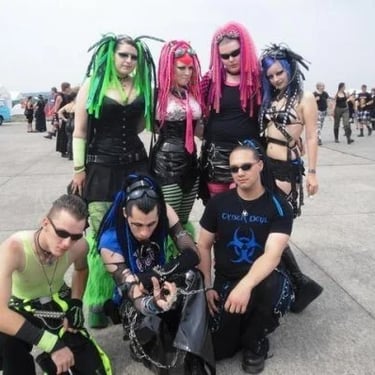
It became a core part of the cybergoth scene, a subculture that blends element of goth and rave scenes with apocalyptic, futuristic vibes and a love for all things neon. Initially, however, the dance style was more closely associated with Rivetheads, devotees of industrial music and culture who favored a more mechanical, industrial look.
You’d find these enthusiasts in dark clubs wearing black leather, military gear and chunky boots, immersed in the raw energy of the music. Over time, as the scene gained exposure online, industrial dance became virtually inseparable from the Cybergoth subculture, evolving into the neon-lit, futuristic look we recognize today; cybergoths in towering platform boots, fluffies leg warmers, cyberlox, goggles, respirators and UV-reactive outfits tearing up the dance floor. For a while, it was a thriving community.
Then the internet got involved.
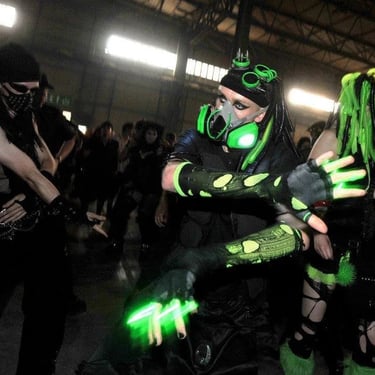
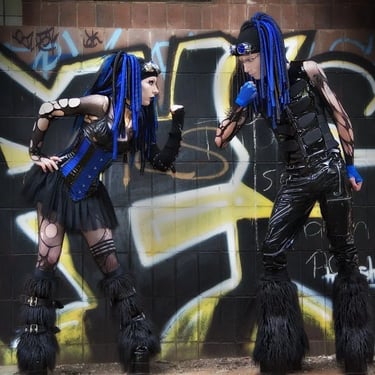
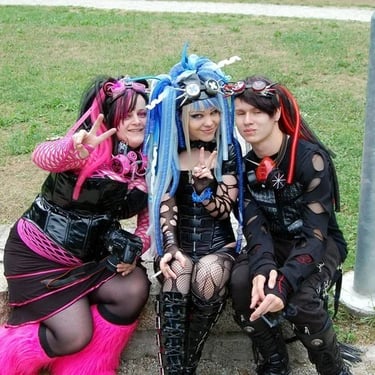
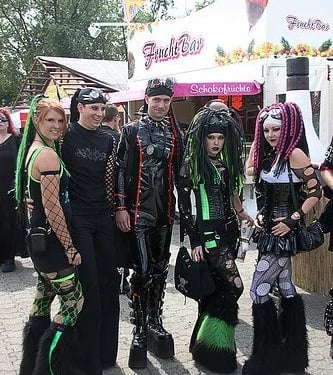
When Fun Turns Viral: The Industrial Dance and the Internet’s Dark Side
The infamous Cybergoth Dance Party video, first uploaded in 2011 was simply a fun moment between industrial dance and cybergoth enthusiasts. A group of young people just thriving, expressing themselves through body moves while rocking their unique style. But instead, it blew up in the worst way possible. The internet took it and twisted it with cartoon soundtracks, meme music, turning it into a running joke. What was a lighthearted expression of a subculture quickly became the subject of countless viral videos.
For the young dancers in the video, what started as harmless fun quickly spiraled into something much darker. They were bombarded with cruel insults and mockery from countless internet users. It wasn't just an awkward moment, it turned into full-blown online harassment. Industrial dance, once a creative form of body expression, was now the target of a massive, viral mockery.
For a while, industrial dance faded into the background. Outside of niche clubs and underground festivals, it was mostly remembered as "that cringe meme from the early YouTube days." It became something people laughed at. But scenes like Cybergoth don’t just vanish. They exist beyond fleeting internet trends. And as we know, social media has a funny way of bringing things back into the spotlight, revisiting old subcultures, and giving them new relevance, often with a fresh, more appreciative perspective.
The Revival
Over the past couple of years, industrial dance has been making a comeback and social media are leading the charge. Creators are posting dance routines, tutorials and throwback-inspired looks, breathing new life into a style that had been pushed to the margins for years. What was once dismissed as a relic of early internet cringe is now being embraced by a new generation, many of whom weren’t even around when the infamous Cybergoth Dance Party video first went viral.
Hashtags like #IndustrialDance and #Cybergoth are racking up millions of views. Some Tiktokers are going all-in with full OG cybergoth looks: PVC outfits, platform boots, glow-in-the-dark cyberlox. Others are giving the dance a modern spin, blending industrial movements with contemporary electronic music. The result ? A fusion of old-school industrial energy and modern club culture, introducing the style to an entirely new audience. Part nostalgia, part reinvention, and all about having fun.
But this revival isn’t just about the dance. Cybergoth subculture as a whole is getting some well-deserved attention. People are rediscovering the fashion : the neon-accented, dystopian-inspired outfits that set cybergoths apart from both goths and ravers. They’re diving into the music, from classic industrial and EBM to harder, more aggressive aggrotech sounds. Even underground clubs, long considered the last refuge of the scene, are seeing fresh interest from newcomers eager to experience this energy in real life.
But Some Never Stopped Dancing
Despite industrial dance’s fluctuating visibility, there’s always been a core group of die-hard fans who never stopped. While the internet moved on, they kept the scene alive in underground clubs, industrial music festivals and online communities. From dark, neon-lit dance floors in Germany to niche Facebook groups sharing mix tapes, the culture never fully disappeared, it just went back underground, where it’s always thrived. For these veterans, the TikTok revival is just another chapter in the story. They welcome the new wave of dancers, but for them, industrial dance was never “dead” to begin with.
So, What’s Next ?
Industrial dance will probably never go fully mainstream, but one thing’s for sure: it’s not just a meme anymore. The internet may have laughed at it once, but now, it’s dancing along.
And honestly ? It’s about time.